How to Say “I Don’t Know”
Nobody believes you when you bluff, anyway.
There are few things more stressful than being caught out with a high stakes question when you don’t have the answer. But getting comfortable admitting what you don’t know is key to building confidence and gravitas.
Consider an early stage entrepreneur pitching to experienced investors:
If you bluff, bullshit, or waffle, they will probably find out.
If they know you bluffed on one thing, it kills the credibility of everything else you said.
They already know you don’t know everything. Saying “I don’t know” proves you do too.
In the early stages, startups have almost no data. No revenue history, no proven team track record, no product in market. The investor is almost entirely betting on the person. Integrity - “Does this person tell the truth when the truth is inconvenient?” - is one of the few things we can assess.
By reframing hard questions as an opportunity to demonstrate your integrity and follow through they become less scary. And the less scared you are, the better your brain is going to function under pressure.
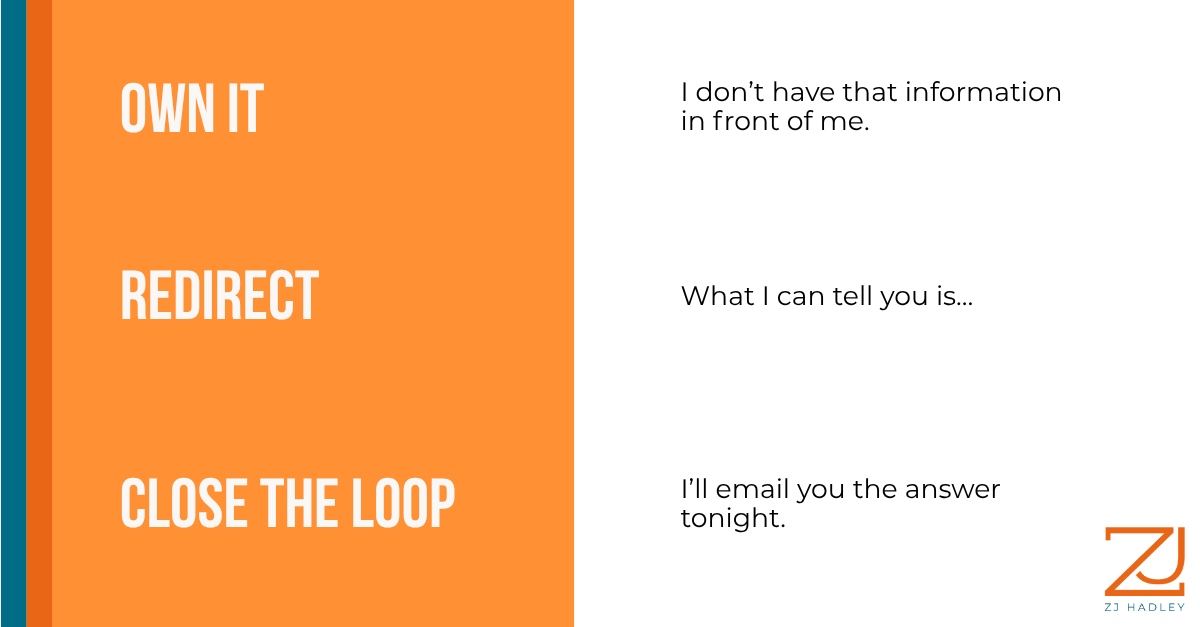
Here’s what to do when you don’t know the answer:
Own it cleanly. No softening, no apology. "I don't have that number in front of me."
Redirect to what you do know. Something adjacent and strong. "What I can tell you is our retention at month six is 84%."
Close the loop. State how you will follow up with specificity. "I'll get you the exact figure by Thursday."
If you don’t already have it, this presents a perfect opportunity to get the asker’s contact information for follow up, and secures an additional touchpoint.
Working on your pitch? I help entrepreneurs show up with confidence and get that bag. Book a free info call here.